What Is Fundamental Analysis in Crypto and RWA Markets?
Canborsa Team

Technical analysis tells you what the price is doing. Fundamental analysis tells you what the asset is actually worth. In any market — crypto, stocks, or tokenized real-world assets — knowing how to evaluate fundamentals is what separates investors from gamblers.
Fundamental analysis vs technical analysis
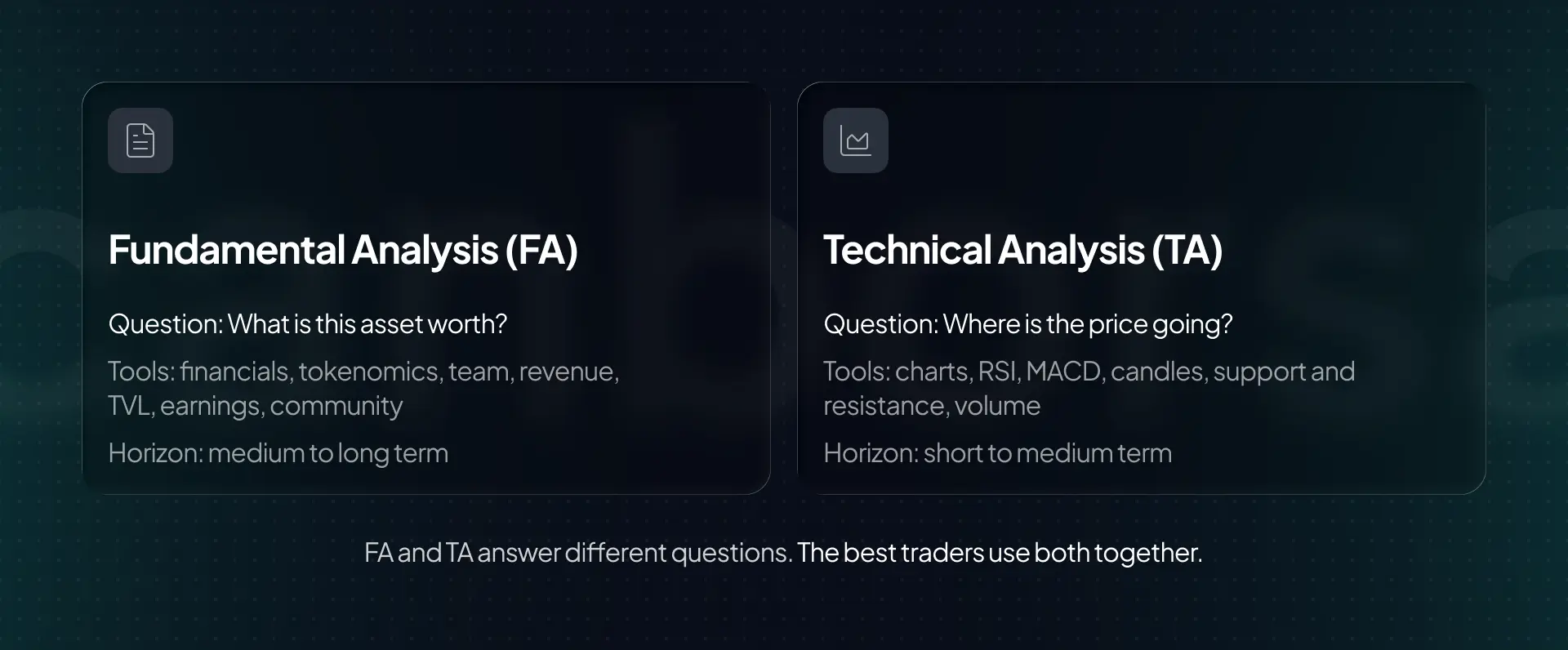
A practical way to think about it: use FA to decide what to buy. Use TA to decide when to buy it.
Fundamental analysis works across all asset classes
This is one of the most important things to understand: fundamental analysis is not specific to crypto. The core logic applies to stocks, bonds, commodities, real estate, and tokenized RWAs. What changes between asset classes is the specific metrics you look at, not the underlying framework.
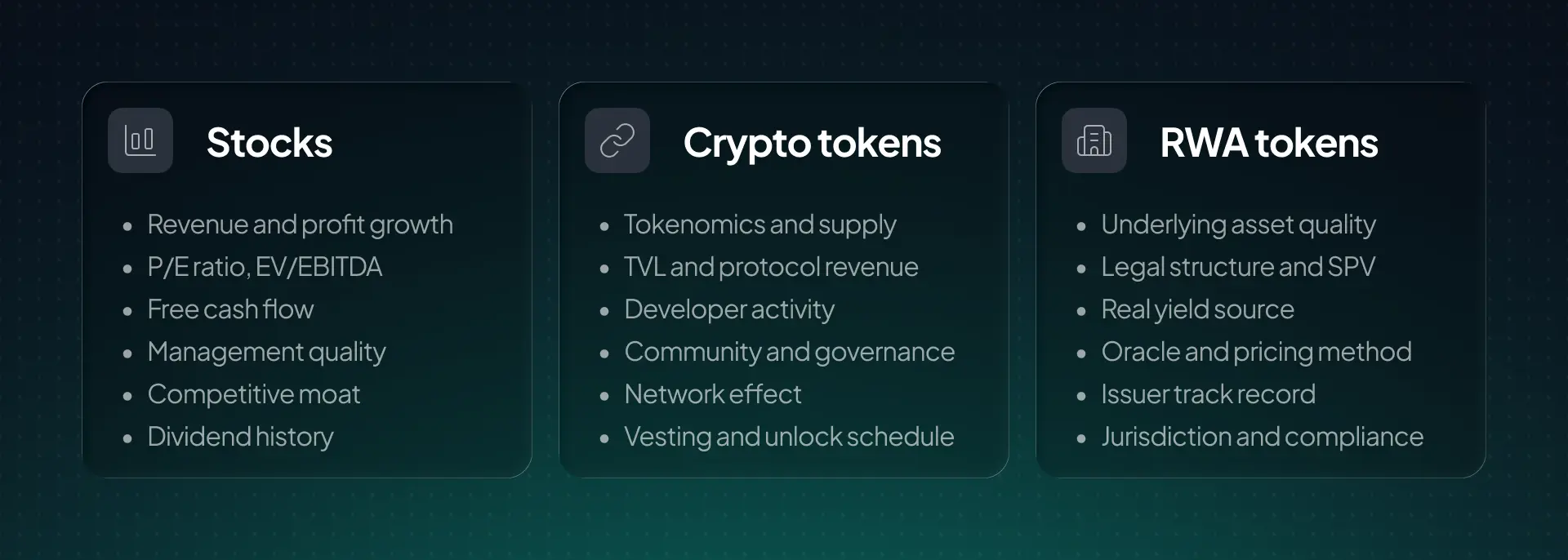
The metrics differ but the mindset is the same: find the gap between what the market is pricing in and what the asset is actually worth.
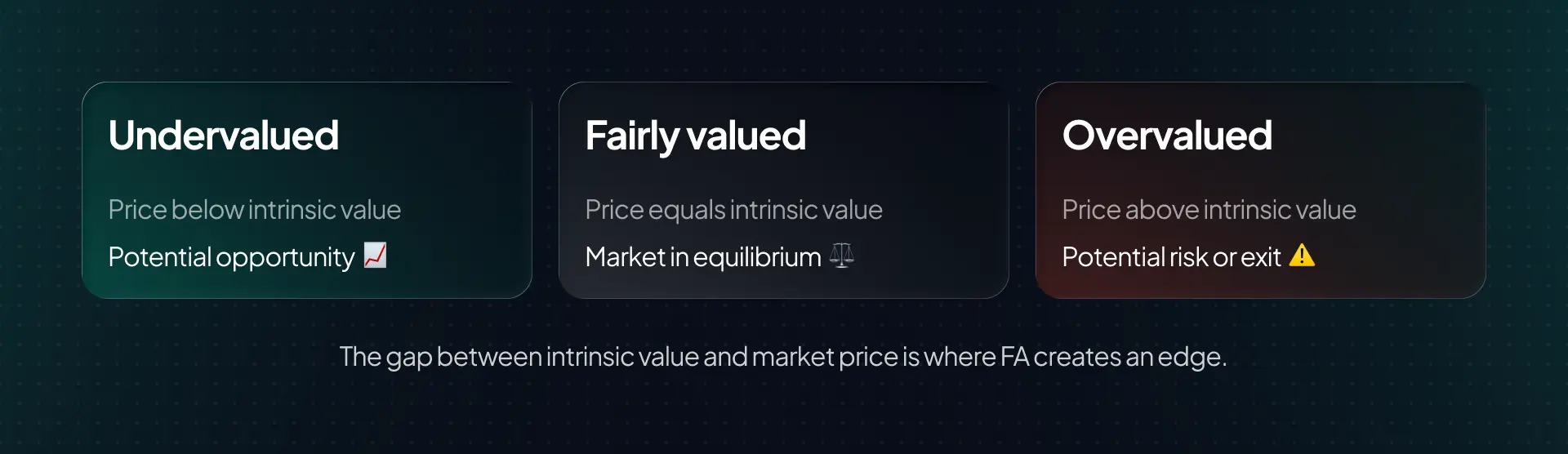
Intrinsic value vs market price
Fundamental analysis is built on one core idea: every asset has an intrinsic value based on its fundamentals, and the market price is not always equal to that value. When price falls below intrinsic value, there may be an opportunity. When price rises far above it, there may be risk.
Key fundamental analysis metrics for stocks
If you trade tokenized equities or want to understand how traditional finance evaluates companies, these are the core stock metrics used by professional analysts worldwide.
Stock example: Apple in 2022 traded at a P/E of around 25 with 8% revenue growth and massive free cash flow. A smaller tech competitor with a P/E of 80 and negative cash flow looks much riskier on FA grounds, regardless of chart patterns.
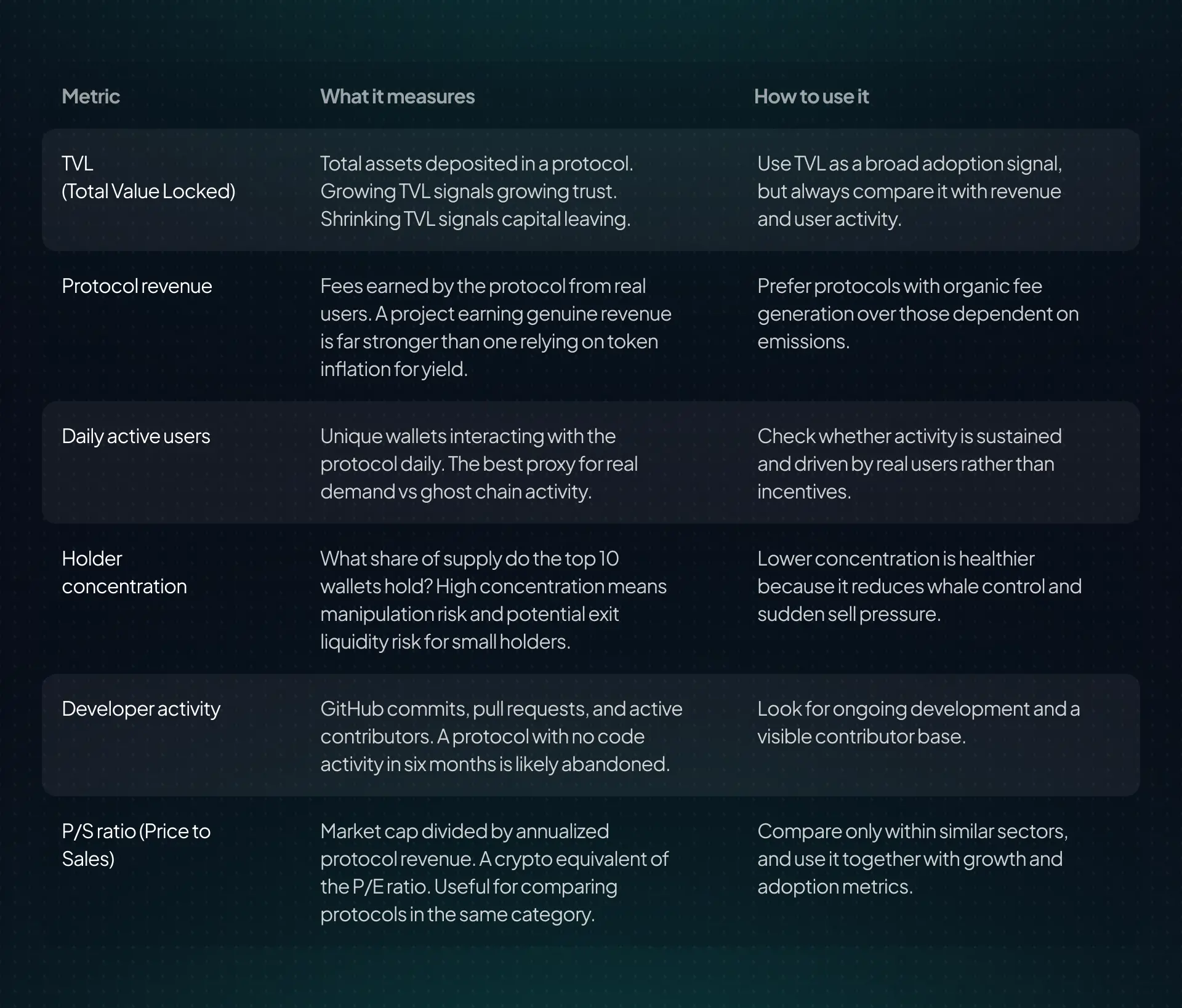
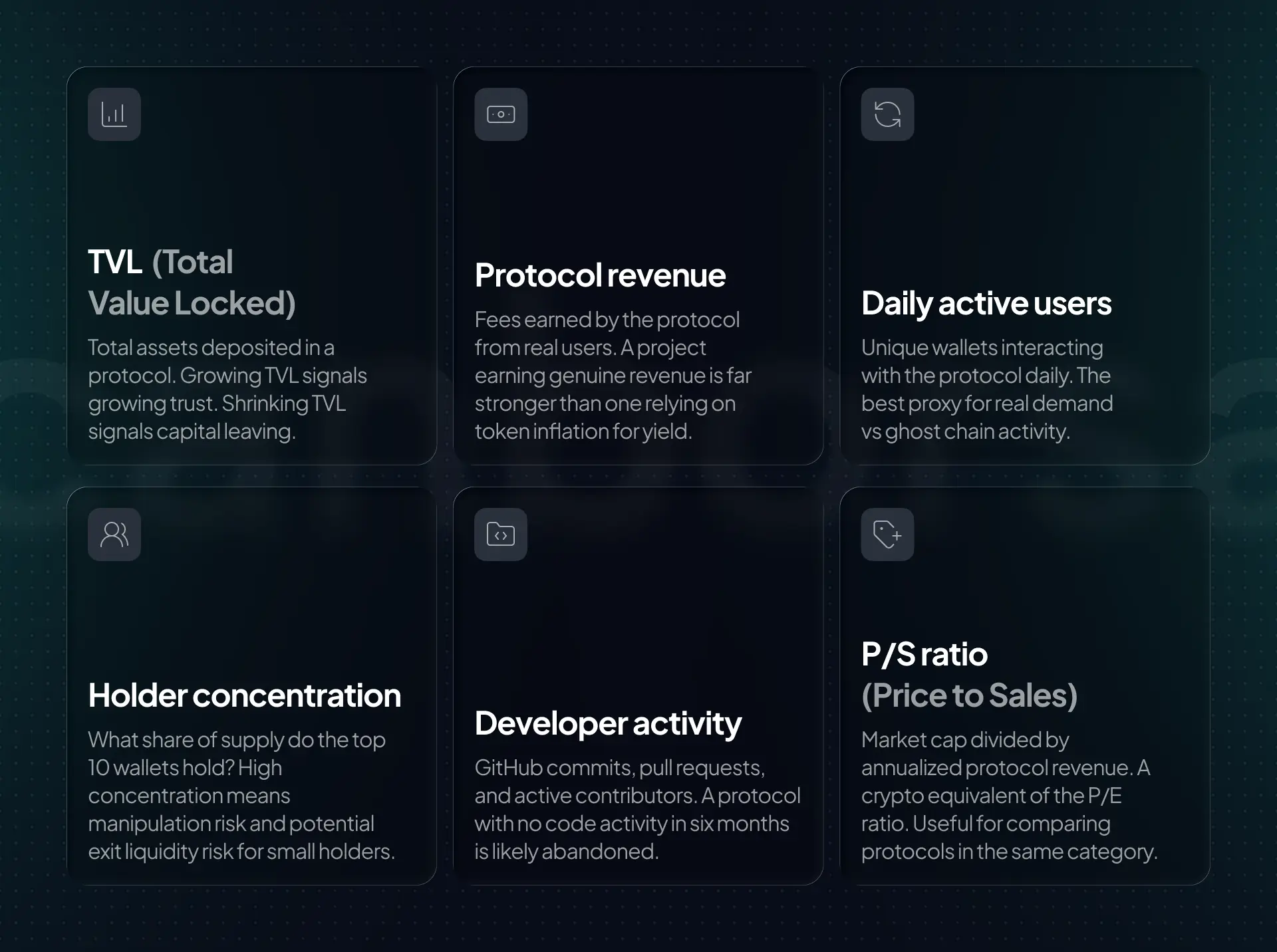
Key fundamental analysis metrics for crypto tokens
Crypto FA borrows the logic from stock analysis but replaces traditional financial metrics with on-chain equivalents. The goal is the same: find projects with genuine value, not just price momentum.
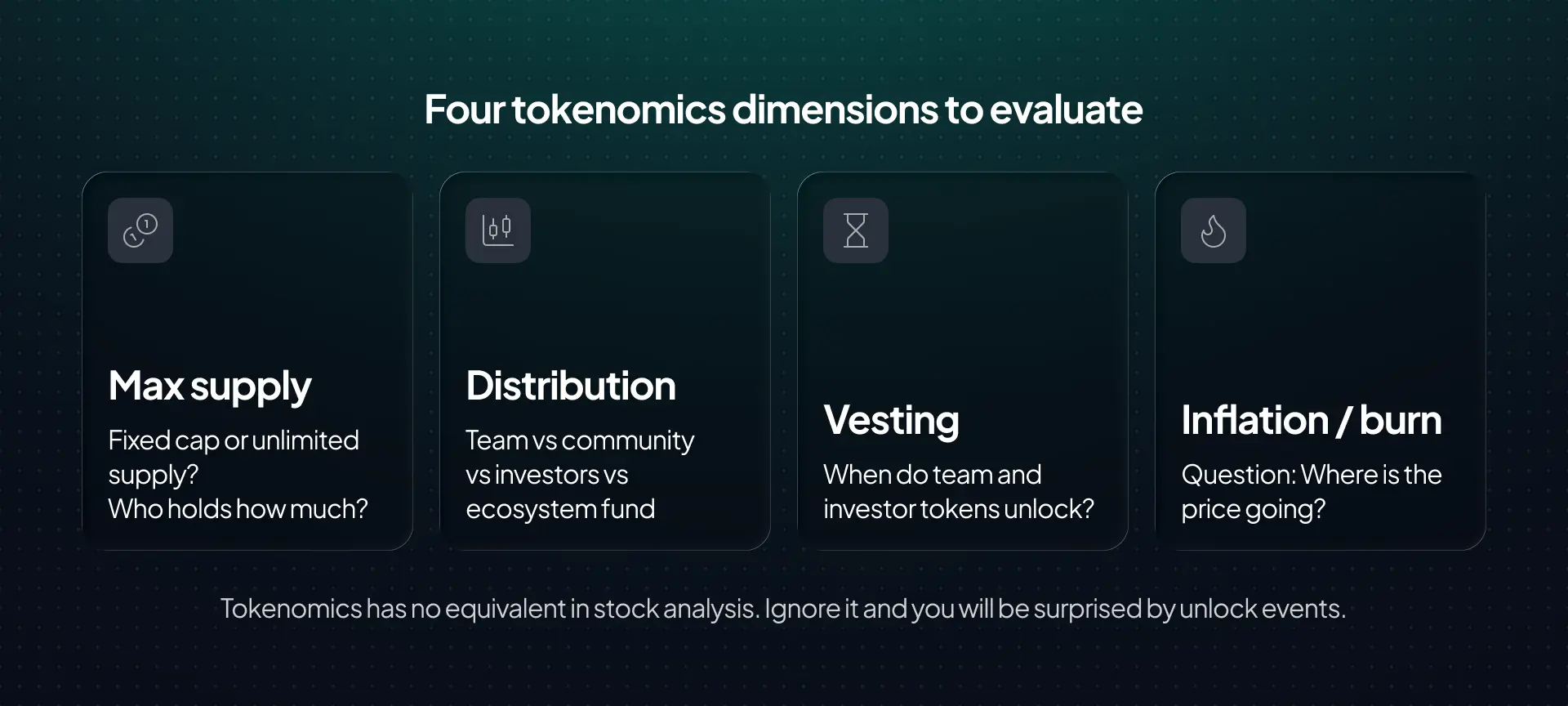
Tokenomics: the metric unique to crypto
Tokenomics has no equivalent in stock analysis. Ignore it and you will be surprised by unlock events.
Fundamental analysis for RWA tokens on Canborsa
Analyzing tokenized real-world assets requires additional checks on top of standard crypto FA, because the value of the token depends on a physical or financial asset held outside the blockchain.
Verify the underlying asset
What real-world asset backs the token? Who holds it? Is there independent verification such as audit reports, legal opinions, or third-party valuations? For real estate tokens, check the property title. For bond tokens, verify the custodian and the issuer.
Understand the legal structure
Is there a Special Purpose Vehicle (SPV) or trust structure? What jurisdiction governs it? What rights do token holders actually have: economic rights, voting rights, or neither? Read the legal documentation, not just the marketing materials.
Confirm the yield source
Where does the yield come from? Real yield means rent, bond interest, or dividends flowing from the underlying asset. Subsidized yield means it is funded by token inflation. A 20% APY from rental income is completely different from 20% APY funded by minting new tokens.
Check the oracle and pricing method
On-chain smart contracts need off-chain data to reflect real-world asset values. What oracle is used? How frequently is valuation updated? For illiquid assets like property, stale pricing is a real and material risk.
Assess the issuer's track record
Has the issuer tokenized assets before? Have they ever failed to honor redemptions? Are they regulated in their jurisdiction? A first-time issuer with no regulatory approval carries meaningfully higher counterparty risk than an established, audited institution.
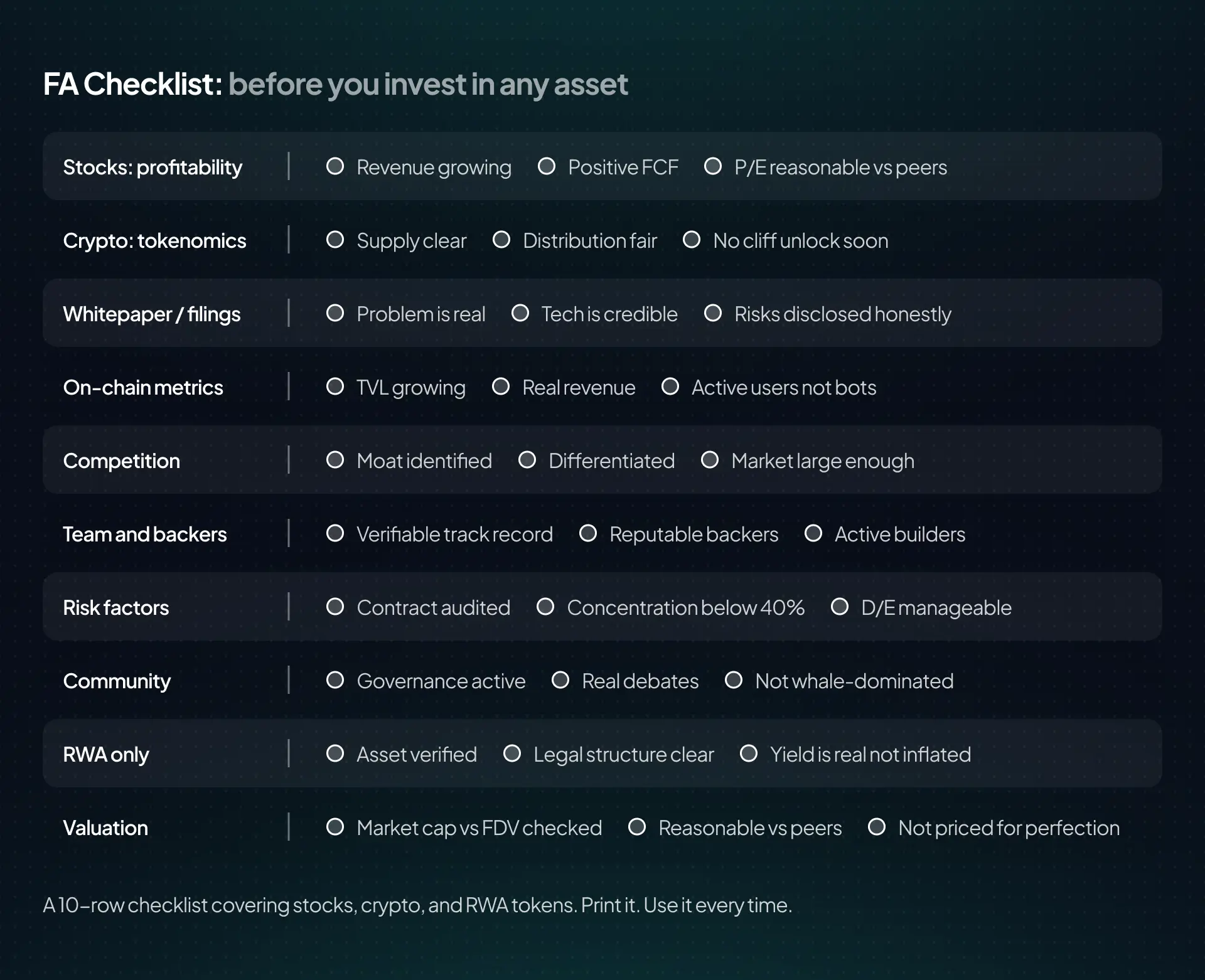
The complete fundamental analysis checklist
Run every investment through this checklist before committing capital. It takes thirty minutes and can save thousands.
Key takeaways
- Fundamental analysis asks "what is this asset worth?" and works across stocks, crypto, and tokenized RWAs. The metrics differ but the logic is the same.
- For stocks: focus on revenue growth, free cash flow, P/E ratio, and competitive moat.
- For crypto: focus on TVL, protocol revenue, tokenomics, developer activity, and on-chain metrics.
- For RWA tokens on Canborsa: add checks on the underlying asset, legal structure, yield source, oracle, and issuer credibility.
- Always compare market cap to FDV. A low market cap with a high FDV means large future dilution is coming.
- Good fundamentals improve long-term risk-adjusted outcomes. They do not guarantee short-term price performance.