What Are Real-World Assets (RWA)?
Canborsa Team
Imagine owning a fraction of a Manhattan skyscraper, a U.S. Treasury bond, or an ounce of gold — all from your crypto wallet, tradeable 24/7, with no banks or brokers involved. That's the promise of Real-World Assets (RWA), and it's the foundation of what Canborsa DEX is built for.
What are real-world assets?
Real-world assets (RWA) are physical or traditional financial assets that exist outside the blockchain — but can be represented on-chain as digital tokens. They fall into two broad categories:
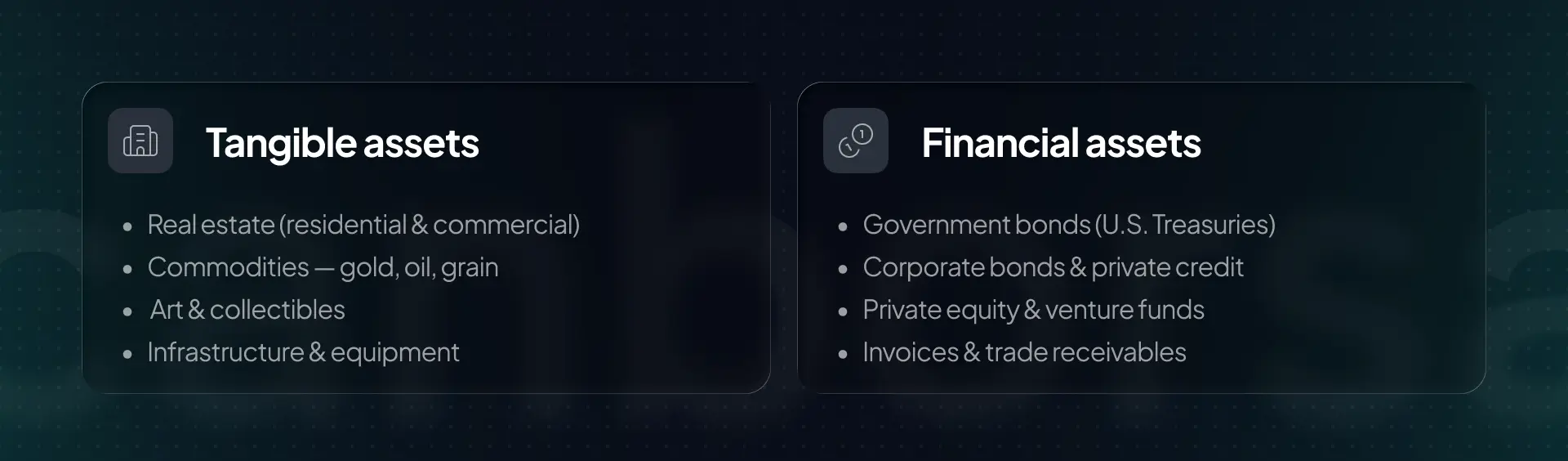
Each of these asset classes represents enormous global wealth. But until recently, they were inaccessible to most investors and completely disconnected from the DeFi ecosystem. Tokenization changes that.
What does "tokenization" mean?
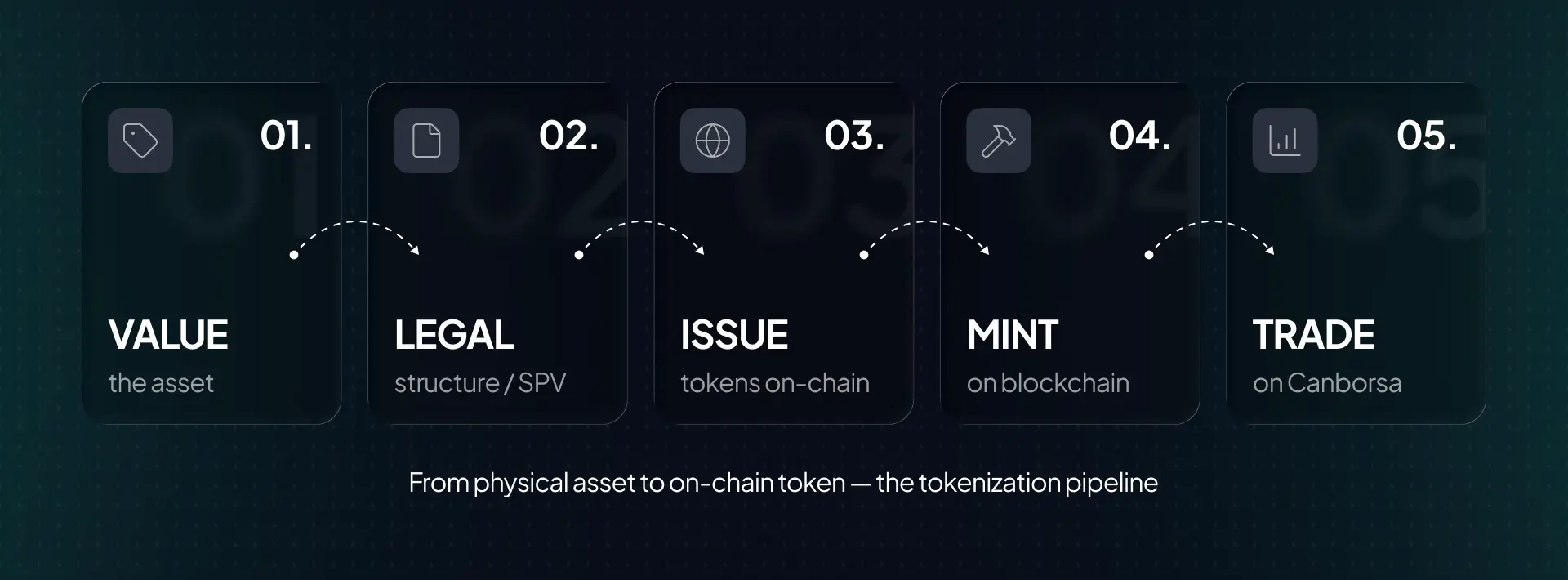
Tokenization is the process of creating a digital token on a blockchain that represents ownership — or a fractional share of ownership — in a real-world asset.
A token is like a digital certificate of ownership. It lives on a blockchain, can be transferred instantly, and can be traded on a DEX like Canborsa.
The asset itself doesn't move. The building still stands in London. The bond still sits in a custodian's account. But ownership and economic rights are now digital, borderless, and transferable in seconds.
A real example: tokenized U.S. Treasuries
One of the most successful RWA categories today is tokenized government bonds. Here's how it works in practice:
- A firm like Franklin Templeton creates a fund holding U.S. Treasury bills
- They issue tokens on-chain representing shares of that fund
- Holders earn the underlying Treasury yield, recently in the 4–5% annual range
- Tokens can be transferred, used as DeFi collateral, or redeemed for cash
This gives anyone with a crypto wallet access to one of the safest yield-generating assets in the world — previously available only through a licensed brokerage account.
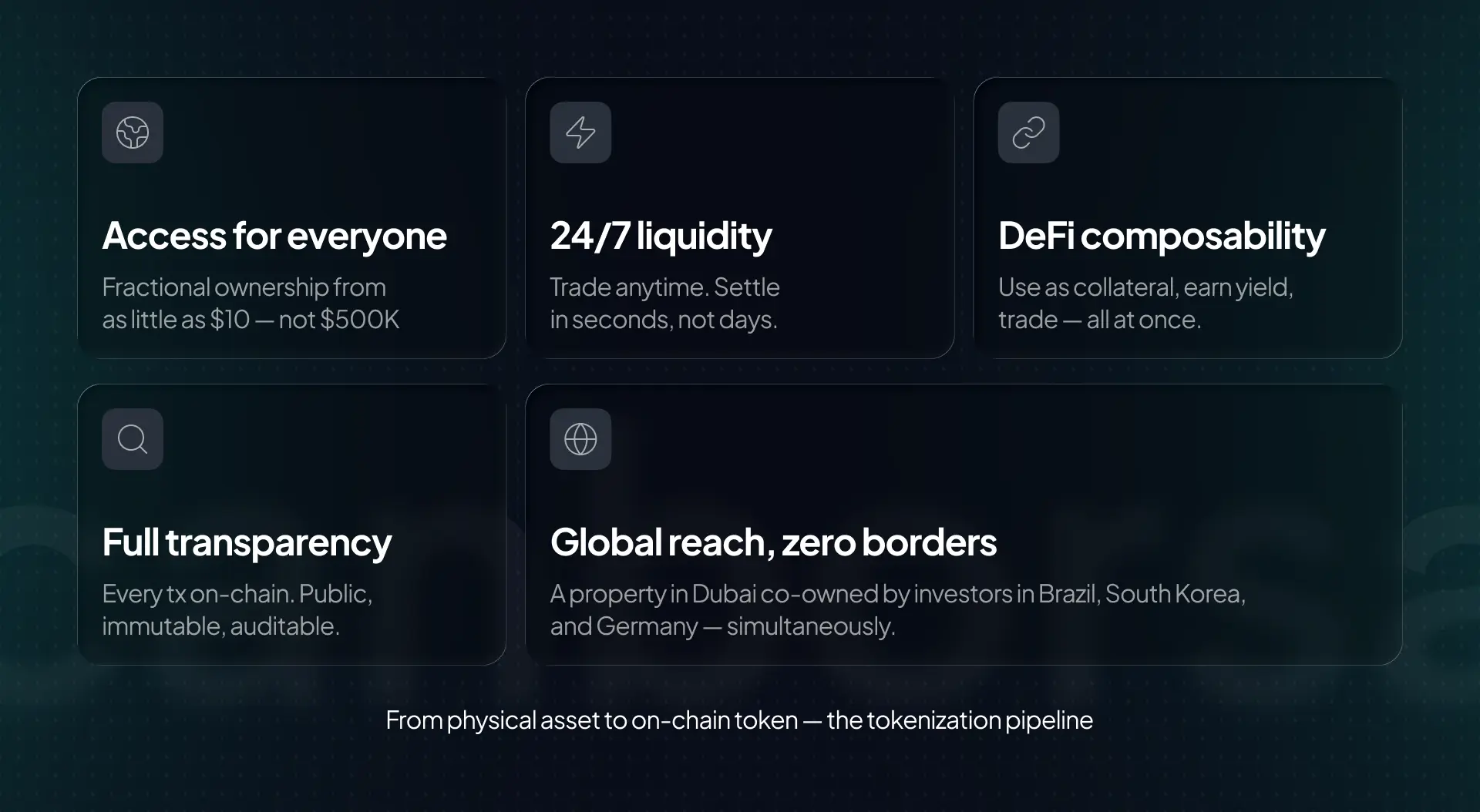
Why RWA matters: 5 reasons
The scale of the opportunity
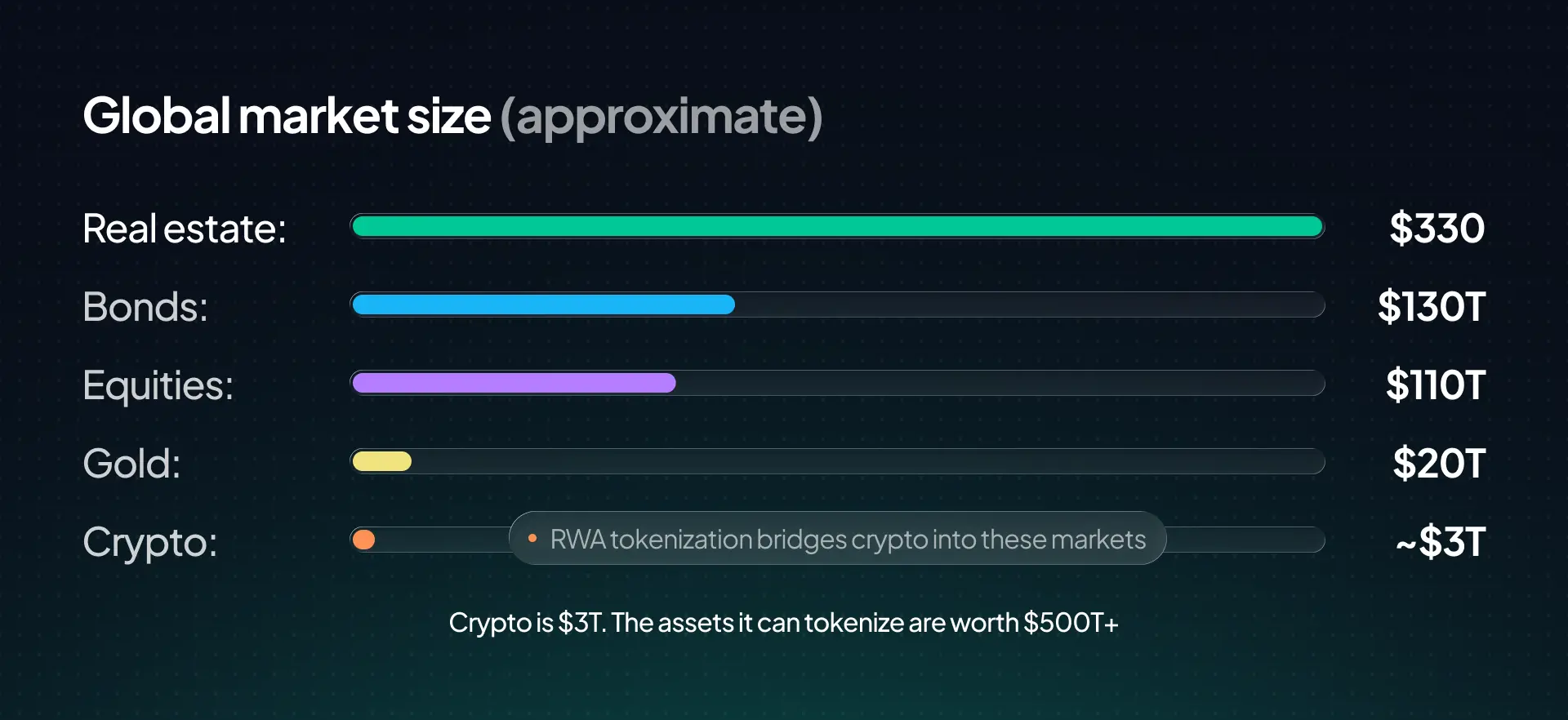
The numbers put the potential in perspective. The entire crypto market is roughly $2–3 trillion. RWA tokenization is a bridge between blockchain rails and hundreds of trillions in traditional assets.
Tokenization of assets is the next generation for markets. — Larry Fink, CEO, BlackRock
Major institutions including BlackRock, McKinsey, and the World Economic Forum project the tokenized asset market could reach $10–16 trillion by 2030.
What are the risks?
RWA is one of the most exciting areas in finance — but honest education means covering risks too. Approach it like any serious investment: with research and position sizing that reflects your risk tolerance.
Counterparty risk — Someone still holds the physical asset or manages the legal entity. If they default or act fraudulently, the token's value is at risk.
Liquidity risk — Some RWA tokens have thin secondary markets. Selling quickly may not always be possible without significant price impact.
Smart contract risk — As with all DeFi, bugs in the underlying code can create exploitable vulnerabilities. Always check if protocols have been audited.
Valuation risk — Real-world assets like property don't have a real-time market price. Token pricing depends on periodic appraisals, which can lag reality.
Always conduct your own research before investing in any RWA token. Understand what asset backs the token, who manages it, and what legal protections apply in your jurisdiction.
Key takeaways
- Real-world assets (RWA) are physical and financial assets — property, bonds, gold, art — represented as tokens on a blockchain
- Tokenization creates digital ownership certificates that are fractional, tradeable 24/7, and composable with DeFi
- RWA unlocks access for everyone — a $10M property becomes accessible to anyone with $10 and a wallet
- The addressable market is $500T+. The tokenized RWA market is projected to reach $10–16T by 2030
- Canborsa is the DEX built specifically for RWA — compliant infrastructure, on-chain yield, multi-asset support
- Key risks: counterparty, regulatory, oracle, liquidity, and smart contract — always do your due diligence